
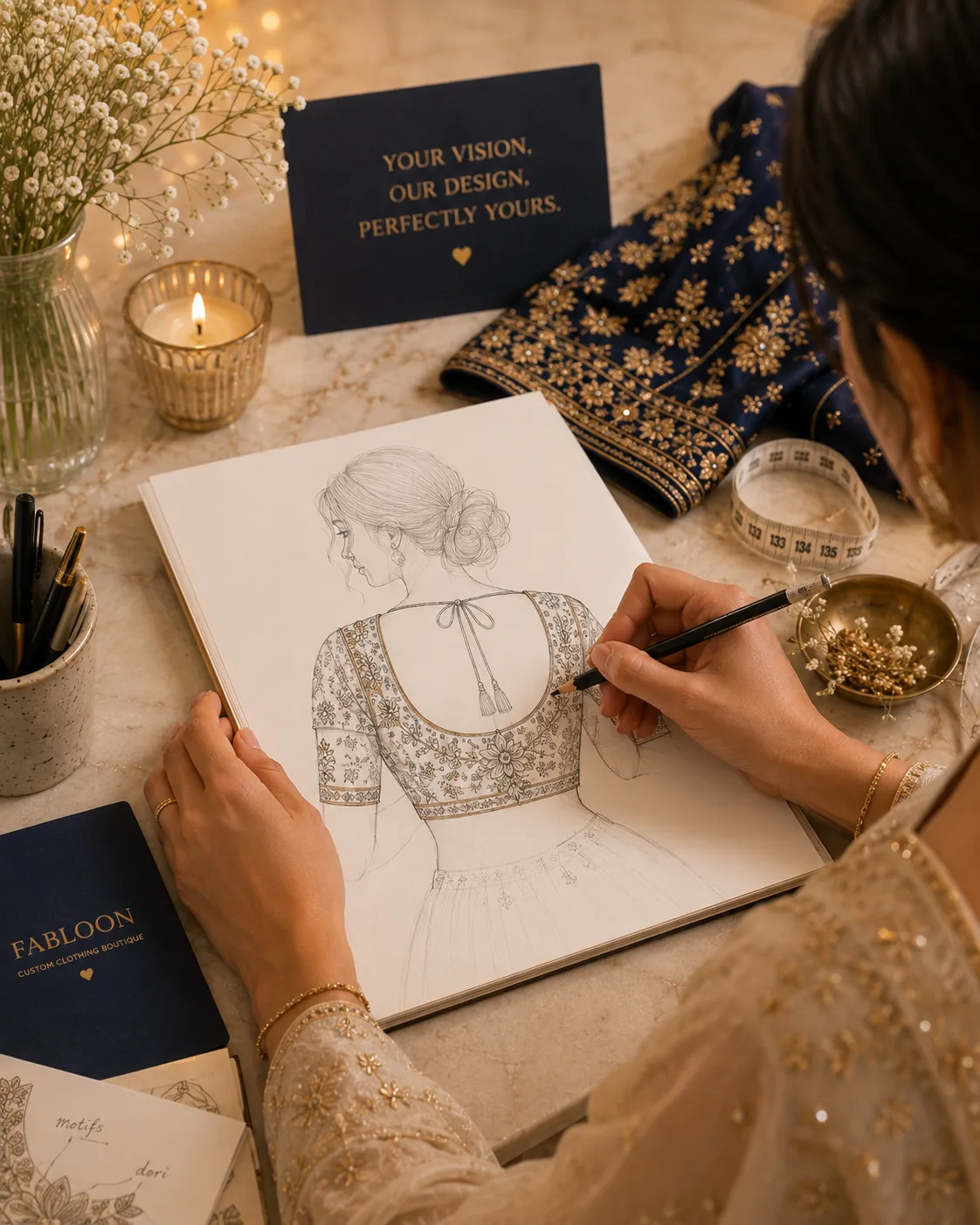
Almost every custom outfit starts the same way — a customer opens their phone and shows FABLOON something: a Pinterest screenshot, a photo of an actress in a magazine, a saree that's been sitting in a cupboard for years, or sometimes just a rough idea with no image at all. This is the starting point of live designing, FABLOON's term for the collaborative design consultation Chennai customers use to turn a reference into something they can actually wear. It's less about copying an image exactly and more about translating its spirit into a garment built for your body.
Why a reference image is a starting point, not a blueprint
A Pinterest blouse design stitched exactly as shown rarely works well on a different body, in different fabric, for a different occasion. The neckline that looked striking on a runway model might not suit your proportions; a heavily embellished bodice photographed under studio lighting might read differently in your actual saree's colour. This is where a custom outfit from reference image work becomes genuinely useful — FABLOON's design team studies what made the reference appealing and rebuilds that appeal around your specific measurements, fabric and occasion, rather than attempting a literal copy.
What a live designing session actually covers
A designer blouse consultation in T. Nagar, whether in person or over video call, typically works through the same core questions:
- What is the occasion, and how formal or restrained does the outfit need to be?
- What does the reference image or saree suggest about silhouette, neckline and embroidery style?
- What has worked, or not worked, for you in past outfits?
- What are the practical constraints — timeline, fabric availability, budget?
By the end of this conversation, the reference has usually evolved into something more specific and more wearable than the original image — adjusted for your body, your saree's actual colour and texture, and the realities of how the garment will be worn and moved in.
Starting from a saree instead of an image
Not every live designing session begins with a picture. Many begin with a saree — an inherited piece, a gift, or simply a favourite that needs a new blouse to go with it. In these cases, the conversation runs in reverse: instead of adapting a design to fit you, the team designs around what the saree's border, pallu and colour already suggest, coordinating embroidery placement and blouse silhouette to complement rather than compete with the fabric.
From consultation to finished garment
Once a direction is agreed, live designing folds into FABLOON's regular custom clothing design process: measurement, material confirmation, stitching by the relevant specialist team, and a quality check before the outfit is finished. The design conversation doesn't end the moment stitching begins, either — if something needs a small adjustment once the piece takes shape, that's part of the same collaborative process rather than a separate complaint.
Bringing your own idea to the table
If you don't have a reference image at all — just a feeling for what you want — that's a perfectly workable starting point too. It simply means the consultation spends more time in open conversation before landing on a direction, which is a natural extension of the same live designing approach.
How this differs from picking a design off a catalogue
Some tailoring shops work from a fixed catalogue of designs a customer chooses between. Live designing works the opposite way — the design doesn't exist until the conversation produces it. This takes slightly longer than pointing at a catalogue number, but the result is built specifically around your body, your saree and your event rather than adapted from a generic template. For customers who've felt disappointed by catalogue-based tailoring in the past, this collaborative approach is usually the biggest difference they notice.
Doing this well remotely
Live designing isn't limited to in-person visits. Over video call, the same conversation happens with reference images shared digitally and the design direction discussed in real time, which is exactly how FABLOON supports customers using its online stitching service. The main adjustment is being a little more descriptive about fabric texture and colour over a screen, since a photo doesn't always capture how a material catches light or drapes in person.
Have a reference image, saree or idea in mind?
Send it to FABLOON and start a live designing conversation built around your body and your occasion.
Send a Reference Image